
Day1
Baku
Arrival in Baku (Heydar Aliyev International Airport). Your guide and driver meet you at the airport holding a name sign and take you to your hotel.
Tour Programmes · 6 days · Baku
A programme based in Baku: the Old City and the Maiden’s Tower, the rock art and mud volcanoes of Gobustan, the Heydar Aliyev Center and the Ateshgah fire temple.
Arrival in Baku (Heydar Aliyev International Airport). Your guide and driver meet you at the airport holding a name sign and take you to your hotel.
Sightseeing tour: a visit to Highland Park, where you enjoy panoramic views of the entire city. This complex combines a memorial part, an observation deck and a magnificent park, with the best view of the “Flame Towers”, one of the symbols of Baku.
A walk along Baku Boulevard, passing State Flag Square, the National Carpet Museum and the Mugam Museum, and enjoying the views of the Caspian Sea.
Old City, or Icheri Sheher: a visit to the Shirvanshahs’ Palace, the former residence of the rulers of Shirvan. The palace building is located on the top of Baku hill in the oldest part of the city, called the “fortress”.
Visit to the workshop of the artist Ali Shamsi. Here guests can see a 90-year-old tree with three female faces and the image of a lion on the facade of the workshop, chat with the artist, enjoy Ali Shamsi’s paintings and make a memorable photo against the background of his paintings.
Museum of Miniature Books. The museum contains miniature books published both in pre-revolutionary Russia and in Soviet times, books published in Moldova, Georgia, Ukraine, Belarus, the countries of Central Asia, and Europe. The hospitable hostess of the museum will tell you about the collection and show unique copies.
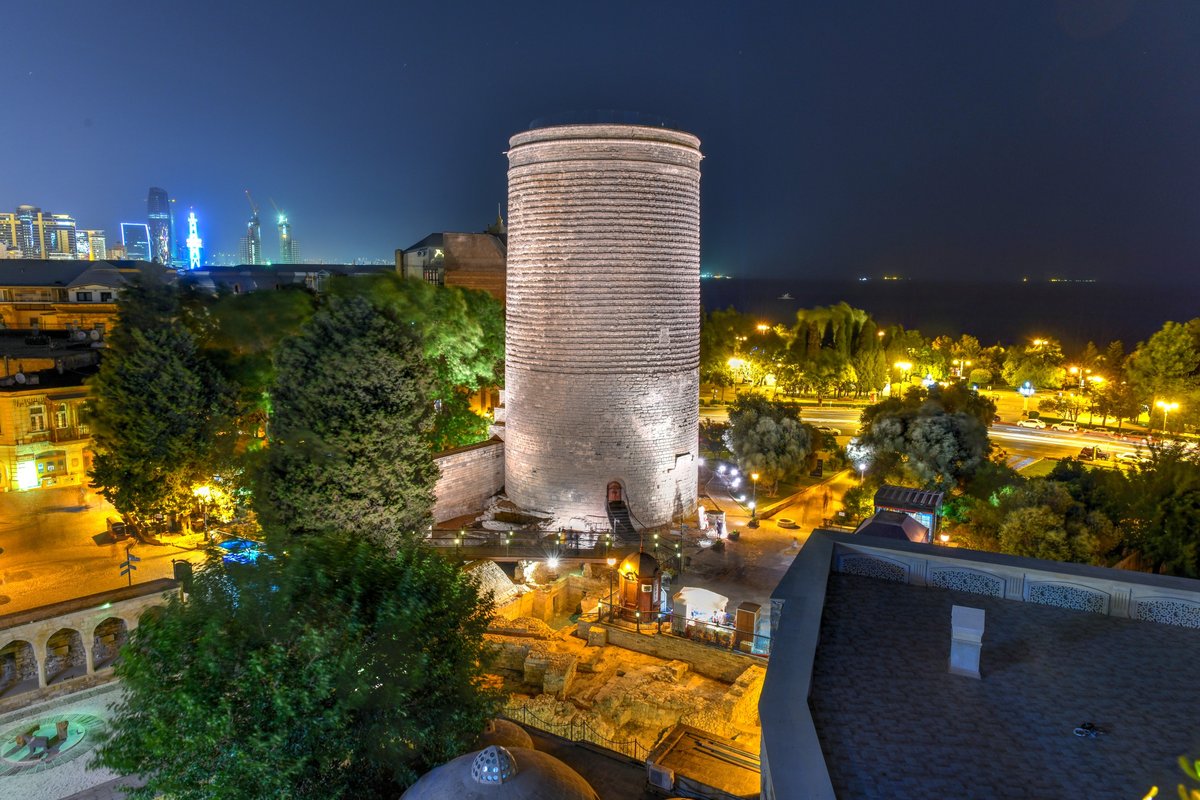
The Maiden’s Tower, or Giz Galasy, rises in the southeastern part of the Old City and has long been considered a symbol of the city. The unique stone tower is 29.5 m high and 16.5 m in diameter, and it keeps many secrets.
A visit to the famous Nizami Street, which crosses the central part of the city from west to east.
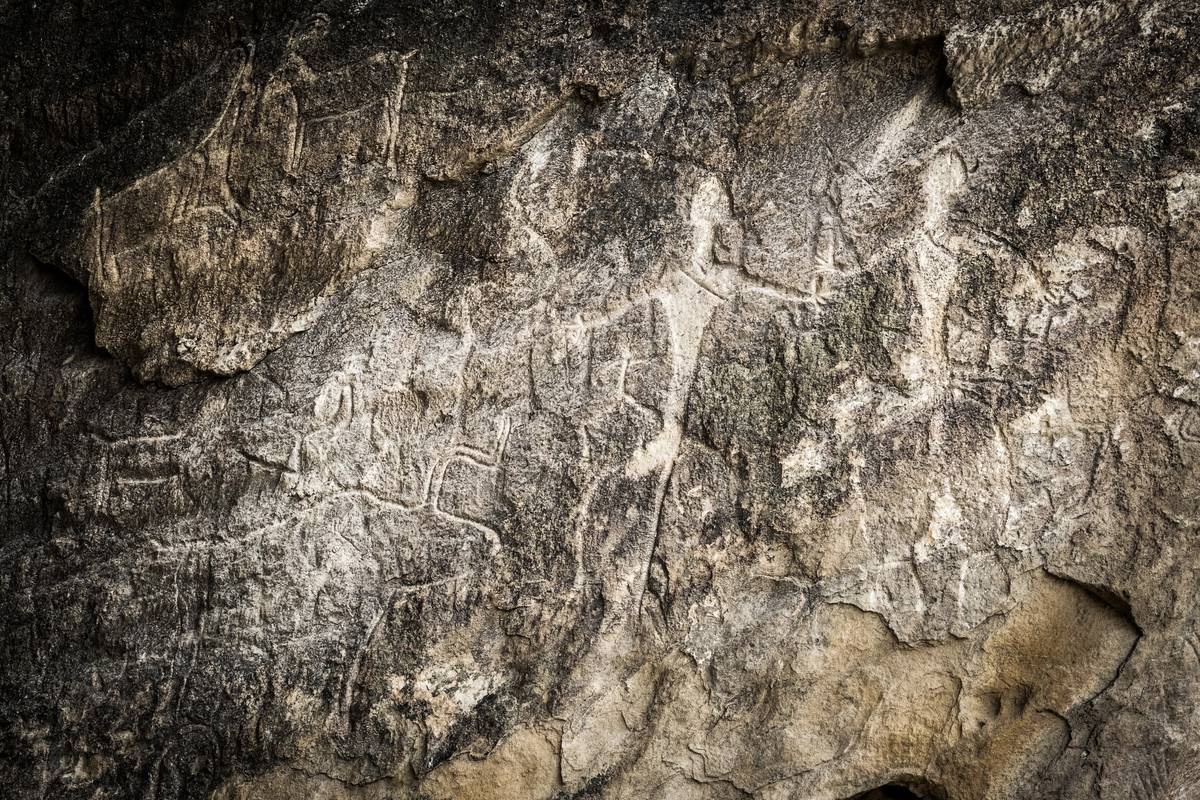
Trip to Gobustan National Park. The reserve is widely known for its excellently preserved rock paintings (petroglyphs), a kind of artistic “archive” of human evolution on planet Earth. The rocks of Gobustan are not only witnesses of the prehistoric period of human existence. They reflect the history of this region over almost 15 thousand years, from the end of the Upper Paleolithic era to the Middle Ages.
Before the tour of Gobustan, guests will visit the interactive museum of the same name, where they can get information about the flora and fauna of Gobustan with the help of special multimedia programmes and touch screens. Few people know that Azerbaijan ranks first in the world in the number of active mud volcanoes. Traces of their activity can be found in Gobustan as well. These volcanoes are formations in the form of a cone-shaped hill with a crater in the soil.
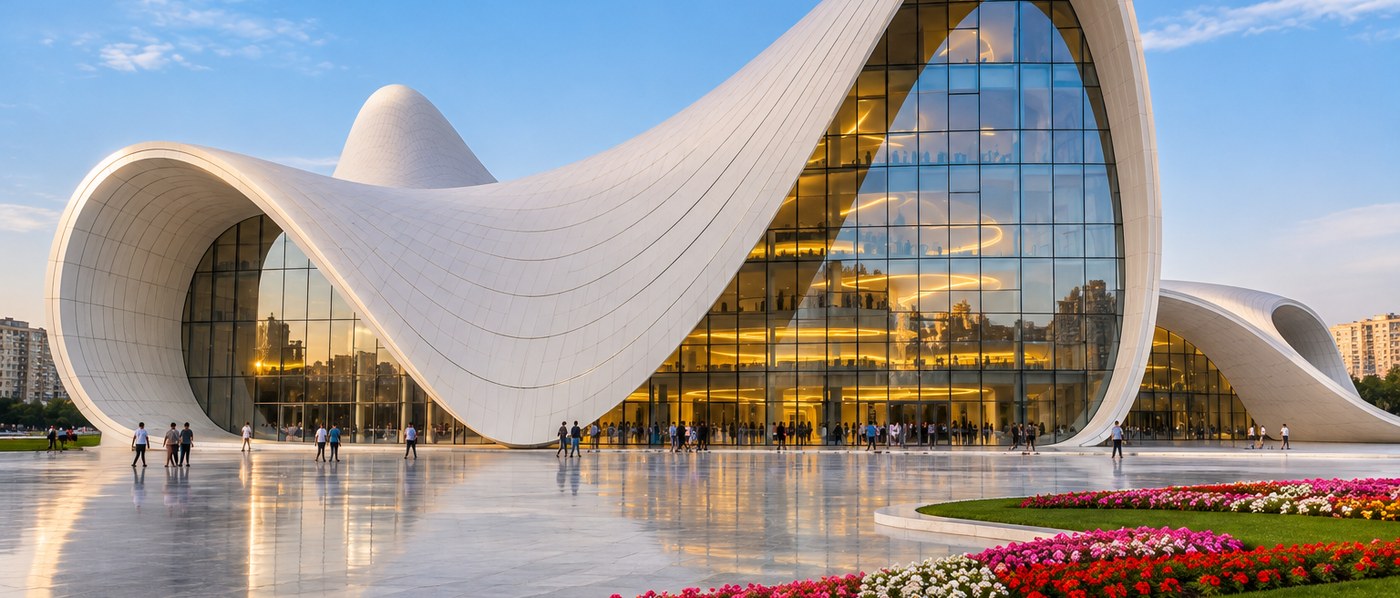
Visit to the Heydar Aliyev Center.
The centre was designed by the famous architect Zaha Hadid and is considered one of the symbols of modern Baku.
The exhibition “Masterpieces of Azerbaijan” is presented on the first floor of the Center. It exhibits unique items reflecting the inexhaustible natural wealth, the centuries-old history and the cultural heritage of the country. One of the most important features of the exposition is that all periods of the history of Azerbaijan are represented, with exhibits relating to different areas of Azerbaijani culture. Ancient Azerbaijani musical instruments are presented in their original sound form. The exhibition also features national clothes and ancient coins.
Visit to the Baku Ateshgah and Gala Fortress.
The Baku Ateshgah, often called the “Fire Temple of Baku”, is a castle-like religious temple in Surakhani, a suburb of Baku. Based on Persian and Indian inscriptions, the temple was used as a Hindu, Sikh and Zoroastrian place of worship. “Atash” is the Persian word for fire. The pentagonal complex, which has a courtyard surrounded by cells for monks and a tetrapillar altar in the middle, was built during the 17th and 18th centuries. It was abandoned in the late 19th century, probably due to the dwindling of the Indian population in the area. The natural “eternal flame” went out in 1969, after nearly a century of exploitation of petroleum and gas in the area, but is now lit by gas piped from the nearby city. The Ateshgah was nominated for the UNESCO World Heritage List in 1998.
The Gala Fortress, dating from the 10th–14th centuries, includes a tower and a stronghold. The tower is 13.8 metres tall and was used for surveillance and defence. Gold coins, remnants of a gold bracelet and ceramic samples from the 10th–16th centuries are displayed in the stronghold. This completed project helps turn the country into a tourist destination, in addition to preserving Azerbaijan’s historical past.
Free time.
Check out from the hotel. Transfer to Heydar Aliyev International Airport.
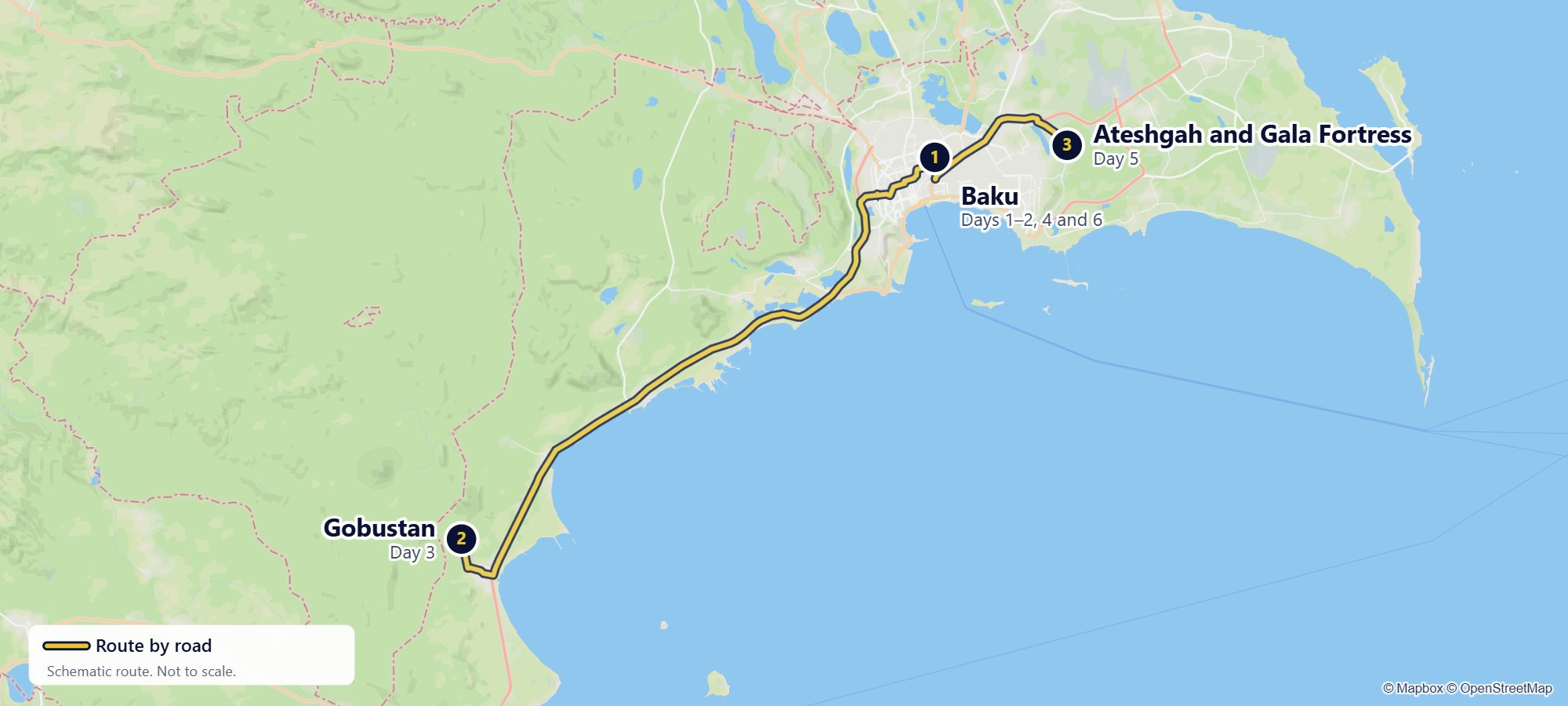
A relaxed pace with light to moderate walking. The airport is about 25 to 40 minutes from central Baku, Gobustan roughly an hour each way, and the Ateshgah about 30 km out on the Absheron Peninsula. Wear comfortable shoes for the rock-art trails. Spring and autumn are the most pleasant seasons; summer is hot in exposed places. Bring water and sun protection.
Tell us your dates and how many are travelling, and we will prepare a proposal built around your brief. The same programme can run for a large group or a small one.
Prices are quoted for each group. We build to your budget.
Request an Itinerary